Dark cabinets were once treated like a risk. Too heavy, too serious, too much commitment. That thinking has changed over the last decade, slowly but clearly. Industry surveys from North American kitchen remodel reports show that darker cabinet finishes now appear in roughly one third of newly remodeled kitchens, with deep brown, charcoal, navy, and near black leading the list. Homeowners are not chasing novelty here, they are chasing longevity, and dark cabinetry tends to age better visually than light laminates that show wear fast.
There is also a practical angle that designers talk about quietly. Dark cabinets hide scuffs, fingerprints, and uneven lighting far better than white or pale gray. That alone explains part of the shift, even if it is rarely said out loud.
Understanding How Light Behaves Around Dark Cabinets
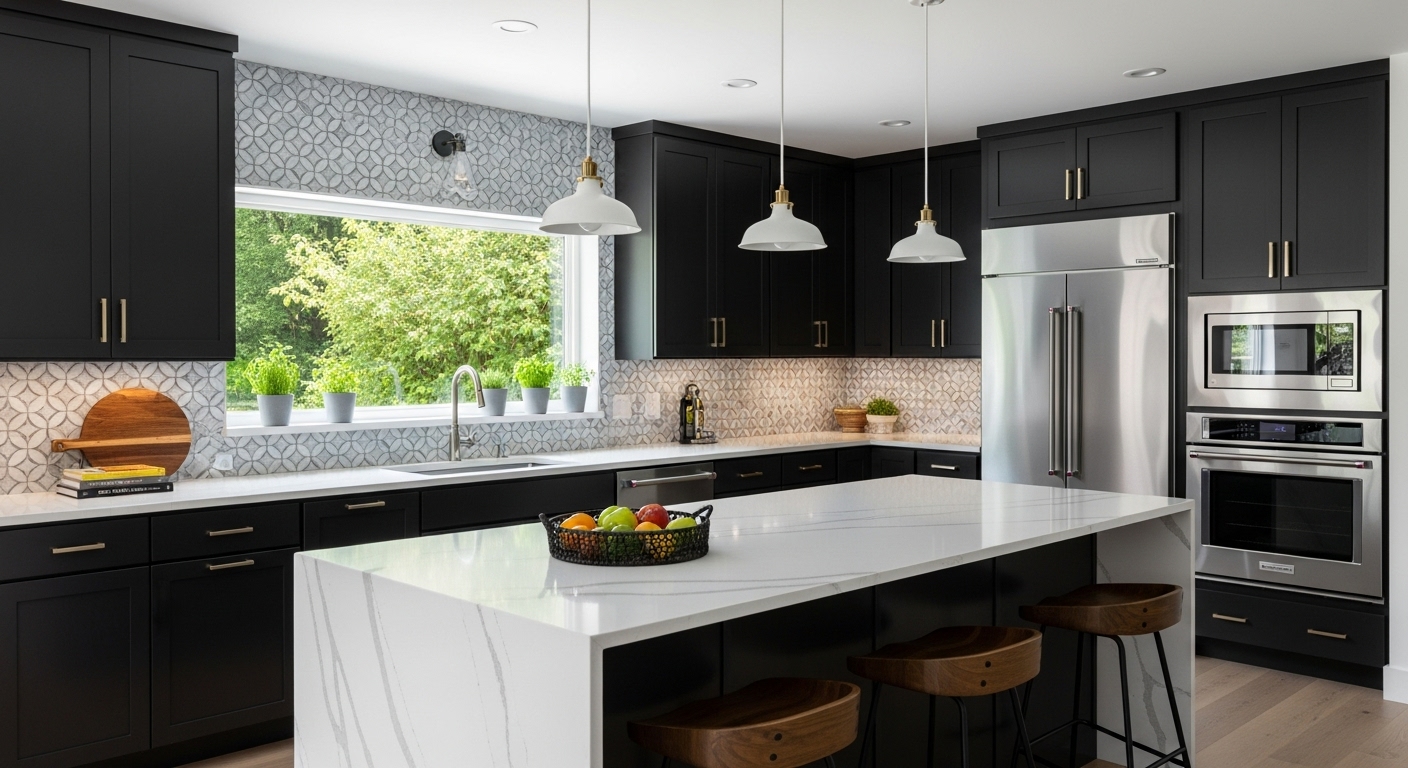
The key to pulling off the dark cabinet trend is balance. Make sure there’s ample natural sunlight that can brighten your cabinets during the day and highlight their undertones. Then, add contrast with light-toned countertops and backsplashes, like marble, porcelain, or stone. Upgrade your hardware if need be (we love modern brass fixtures against a deep blue.)
https://www.drewandjonathan.com/design-and-decor/dark-kitchen-cabinets-ideas/
One thing that often gets misunderstood is that dark cabinets do not automatically make a kitchen dark. Light does not disappear, it reflects differently. Gloss levels, wall color, ceiling height, and fixture placement all change the outcome.
Studies in interior lighting design show that kitchens with higher reflectance surfaces on walls and ceilings can offset cabinet darkness by as much as 40 percent in perceived brightness. That means the cabinets can be deep in tone while the room still reads open.
Dark kitchen cabinets are brilliant for creating a striking, moody backdrop – but nobody wants to cook in a cave. To stop them feeling too heavy, I often pair them with light or white countertops to add contrast and balance. It helps define the different elements in the kitchen and makes the cabinetry stand out in a soft, subtle way.
https://www.nospacelikehome.uk/blog/dark-kitchen-cabinet-ideas-styling-tips-that-work
Natural light matters too. North facing kitchens benefit more from warm artificial lighting when dark cabinets are present, while south facing kitchens can tolerate cooler bulbs without feeling flat. These are small choices, but they stack up.
Countertop Choices That Actually Work With Dark Cabinets
Light Stone and Quartz Surfaces
Light countertops remain the most reliable pairing. White quartz, pale marble looks, and soft cream stone provide contrast that keeps the room from closing in. Data from countertop manufacturers indicates that white and off white quartz still account for over half of all kitchen surface installs, even in homes with dark cabinetry.
The reason is simple. Contrast gives the eye a place to rest. When everything is dark, the space feels heavy fast.
Wood Countertops for a Softer Balance
Wood counters are less common but deeply effective. Oak, maple, and walnut bring warmth that stone cannot. They also reduce the sharpness that some dark cabinets carry, especially in smaller kitchens. Maintenance is higher, yes, but many homeowners accept that tradeoff for character.
Backsplash Ideas That Keep the Room Moving
Classic White Tile With Variation
Plain white subway tile still works, but the key is variation. Handmade finishes, uneven edges, or subtle surface ripples keep it from feeling flat. Designers report that textured white backsplashes are chosen nearly twice as often as flat gloss tile in kitchens with dark cabinets.
That texture catches light differently throughout the day, which matters more than people think.
Dark on Dark Backsplashes Done Carefully
Matching dark cabinets with a dark backsplash can work, but only when grout, lighting, or tile shape adds separation. Vertical stacked tile or thin horizontal formats help break up large dark surfaces. Without that break, the wall can feel like a single block.
Hardware Choices That Change the Mood Entirely
Hardware is a small detail that carries a lot of weight here. Matte black hardware on dark cabinets reads modern and quiet. Brass and warm metals add contrast and pull warmth into the room. Brushed nickel sits somewhere in the middle, safe but not dull.
According to kitchen hardware sales data, brass and champagne finishes have grown steadily since 2018, particularly in kitchens using dark cabinetry. That suggests homeowners want contrast, not camouflage.
Flooring That Supports Dark Cabinetry
Light Wood and Wood Look Floors
Light wood floors balance dark cabinets naturally. Wide plank floors, especially in natural oak tones, are now common in kitchens for this exact reason. They ground the room without competing visually.
Tile Floors With Subtle Pattern
Patterned tile works when the pattern is restrained. Soft geometry or faded encaustic styles bring interest without pulling focus upward. Loud floor patterns under dark cabinets tend to fight for attention, and that rarely ends well.
Wall Colors That Do Not Compete
Neutral walls remain the safest choice, but neutral does not mean cold. Warm whites, light greige, and pale taupe keep the room cohesive. Data from residential paint sales shows that warm neutrals outperform cool grays in kitchens with dark cabinets by a wide margin.
Accent walls can work, but restraint matters. One wall only, and ideally one that does not sit directly behind the cabinets.
Open Shelving as a Visual Break
Open shelves interrupt the visual weight of dark cabinets. Even a single run of shelves can change how the room feels. Wood shelves soften the look. Painted shelves that match the wall color blend quietly.
Designers often place open shelving near windows or corners, where heavy cabinetry would otherwise block light or movement.
Ceiling Treatments That Lift the Space
People forget the ceiling, which is odd. A brighter ceiling finish can improve perceived height significantly. Some kitchens with dark cabinets use subtle wood beams or plank ceilings painted in light tones. This adds texture overhead without darkening the room.
Lighting studies show that brighter ceilings reflect light downward more effectively, which benefits kitchens with deeper cabinet tones.
Real World Mistakes to Avoid
One common mistake is matching everything too closely. Dark cabinets, dark counters, dark floors, dark walls. The result feels compressed, no matter how expensive the materials are.
Another mistake is underlighting. Dark cabinets demand better lighting, not mood lighting alone. Task lighting under cabinets and layered ceiling fixtures are not optional here.
Long Term Appeal and Resale Considerations
Dark cabinets were once viewed as risky for resale. That concern has softened. Recent housing market reports indicate that kitchens with dark cabinets no longer see a resale penalty when the rest of the design is balanced. Buyers respond to cohesion more than color alone.
What matters most is execution. Poor lighting and heavy finishes turn buyers away. Thoughtful contrast and material choice do not.
Final Thoughts on Decorating With Dark Cabinets
Dark cabinets are not a trend chasing attention. They are a response to how people actually live in kitchens. Mess happens. Light changes. Styles age. Dark finishes handle all of that with more grace than they are often given credit for.
When paired with light, texture, and intention, dark cabinets stop feeling dramatic and start feeling settled, like they belong there already.