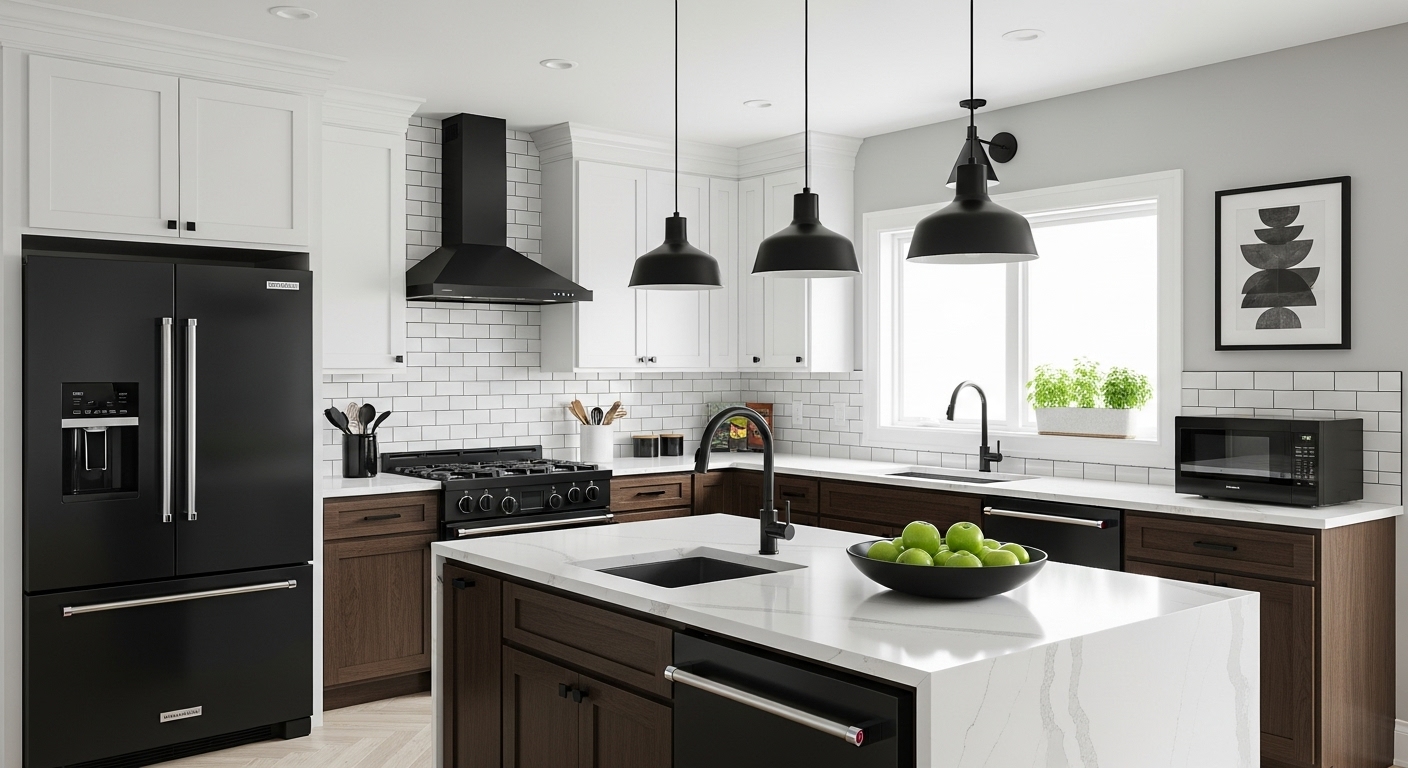
Kitchen decor with black appliances feels like one of those things people argue about at dinner, right after politics and whether pineapple belongs anywhere near bread. Some love it hard. Others flinch. I sit in the middle, arms crossed, thinking out loud, because black appliances can feel heavy, yes, but also grounded, calm, almost stubborn in a good way. This article wanders a bit. That’s intentional. Kitchens are lived-in places, not showrooms.
Black appliances and the strange comfort of contrast
Black appliances do not beg for attention. They just sit there, doing their job, humming quietly, like a cat that ignores you until feeding time. Contrast is where things start making sense. White cabinets next to black appliances still remain the most common pairing in North American homes, according to housing design surveys that show over 45 percent of renovated kitchens stick with light cabinetry when using dark appliance finishes. That stat surprised me, honestly. I expected more chaos.
The contrast helps. Your eyes rest somewhere. Without it, everything feels like soup. I once walked into a kitchen where black appliances met dark espresso cabinets and dark floors. It felt like stepping into a cave with a refrigerator. Not wrong, just… a mood.
Cabinet colors that don’t panic around black
Cabinets are where people usually mess this up, not on purpose. They panic. Black appliances arrive, and suddenly every decision feels louder than it should.
Soft whites still do well, but not the blinding kind. Slightly warm whites, off-white, eggshell, those colors that look dirty only if you stare too long. Gray cabinets work too, but the mid-range grays. Too light and it looks unsure. Too dark and it turns gloomy fast.
Gray kitchen cabinets rank among the smartest design choices for modern homes. Their remarkable versatility shines through every décor style, while practical benefits like hiding fingerprints and dirt make them a dream for busy families. Small kitchens feel more spacious with light gray cabinets, and larger spaces gain an elegant touch with darker shades.
https://www.kitchencabinetdepot.com/blog/modern-gray-kitchen-cabinets.html
Wood tones deserve more credit here. Natural oak, walnut, even maple with visible grain. Black appliances next to wood feels honest, like someone cooked here and didn’t hide it. Industry data from kitchen remodel reports shows wood cabinetry has climbed back above 30 percent preference in recent years, after a long dip. Maybe people got tired of pretending they don’t spill coffee.
Countertops that stop the black from feeling too serious
Counters do a lot of emotional work. With black appliances, they almost act like mediators in an argument. Quartz is popular here, especially lighter quartz with soft veining. It breaks the dark shapes without screaming about it.
Granite still exists, despite what some designers whisper. Lighter granite with movement works well, especially in busy households. Studies from home improvement associations suggest countertops take the most physical abuse in kitchens, more than cabinets or floors, which makes sense. That’s where life happens. Choose something that forgives.
Butcher block counters with black appliances are tricky and wonderful at the same time. They warm everything up, but they demand care. Forget to oil them once and they sulk. Still, visually, it’s hard to beat.
When it comes to modern kitchen design, one of the most striking combinations is black kitchen cabinets paired with butcher block counters. This contrast not only enhances the visual appeal but also creates a warm and inviting atmosphere in your cooking space. In this article, we will explore how to effectively incorporate black cabinetry and butcher block countertops into your kitchen design while maximizing both style and functionality.
https://www.coohom.com/article/stylish-black-kitchen-cabinets-with-butcher-block-counters
Flooring choices that quietly hold everything together
Flooring gets ignored until it squeaks or cracks. With black appliances, lighter floors usually help, but not always. Light wood, light tile, even concrete with a pale finish. Dark floors can work, but then you must add light elsewhere or the room starts to feel like it’s holding its breath.
Data from residential flooring trends shows about 60 percent of homeowners choosing neutral or light-toned flooring during kitchen updates. That number jumps higher when dark appliances are involved. People want balance, even if they don’t say it out loud.
I once saw patterned tile under black appliances and thought it would be chaos. It wasn’t. It was oddly playful, like socks with sandals but somehow pulled off.
Hardware and fixtures that don’t try too hard
This part matters more than people admit. Cabinet hardware can either calm the room or send it spiraling. With black appliances, matte black hardware is an obvious choice, maybe too obvious sometimes. It works, but it can feel matchy.
Brushed brass or champagne bronze bring warmth. Not shiny gold. That’s different. Warm metal against black feels intentional, like someone thought about it on a Tuesday afternoon, not rushed on a Sunday night.
Faucets in black are everywhere now. According to plumbing fixture sales data, matte black faucets have seen double-digit growth year over year. People love them. They also show water spots. That’s the tradeoff. Beauty always asks for something back.
Lighting that saves the room on bad days
Lighting is not decoration, it’s survival. Black appliances absorb light, they don’t bounce it. So lighting must work harder. Under-cabinet lighting becomes almost mandatory. Not optional. Mandatory.
Pendant lights over islands help, but don’t go too trendy. Those regret cycles are brutal. Warm light temperatures around 2700K to 3000K tend to flatter black surfaces better than cooler light, which can make everything look harsh and tired.
Energy studies show kitchens with layered lighting reduce eye strain and improve task efficiency, which sounds clinical, but really it just means you stop squinting while chopping onions.
Backsplashes that add rhythm not noise
Backsplashes are emotional decisions disguised as tile samples. With black appliances, subway tile still shows up a lot, especially white or cream. Predictable, yes, but stable.
Textured tile works well here. Zellige-style tiles, handmade looks, slight imperfections. They catch light in uneven ways and soften the dark appliance edges. Glass backsplashes can work too, but only if the rest of the kitchen stays calm.
According to interior design usage reports, backsplashes are one of the most frequently changed elements in kitchens, often updated within 7 to 10 years. That tells me people experiment here because it feels reversible.
Small decor moves that matter more than they should
Plants. Always plants. Even fake ones if you must, though real ones feel better, even when they die slowly. Green against black appliances feels alive, stubborn, hopeful.
Open shelving can work, but only if you keep it messy on purpose. Too perfect looks staged. A chipped mug, a leaning cookbook, a bowl that doesn’t match. Those things make black appliances feel less showroom, more Sunday morning.
Textiles help too. A runner rug, dish towels with texture, something that softens the hard lines. Data from home comfort studies shows soft surfaces reduce perceived stress in kitchens. I believe that. My shoulders drop when I see fabric.
When black appliances actually make sense
Black appliances shine in kitchens that get real use. Families, shared apartments, people who cook late and clean halfway. Fingerprints show less than stainless steel, which is why black appliance sales saw a spike during years when home cooking increased sharply. People wanted practical, not flashy.
They also age quietly. Trends scream. Black just clears its throat.
Final thoughts
Kitchen decor ideas with black appliances are less about rules and more about listening to the room. Some kitchens want drama. Others want calm. Black appliances can do both, depending on what you let them sit next to.
I’ve changed my mind on them more than once. Probably will again. That’s fine. Kitchens change as people do. Some days you want bright. Some days you want quiet. Black appliances don’t judge. They just stay there, waiting for the next meal, the next mess, the next idea that might work or might not.