White kitchen cabinets keep showing up year after year, and not just because designers are stubborn. Industry housing reports have repeatedly shown that light colored kitchens remain among the top preferences for resale focused homes, with white or off white cabinets leading the list in new builds and remodel surveys. There is a practical reason too. White reflects light better than darker finishes, which helps smaller kitchens feel less boxed in, even when natural light is limited.
But white cabinets alone do nothing special. Without the right decor choices, they can feel flat or oddly sterile. The real work happens around them, not on them, which is where decor decisions start pulling weight.
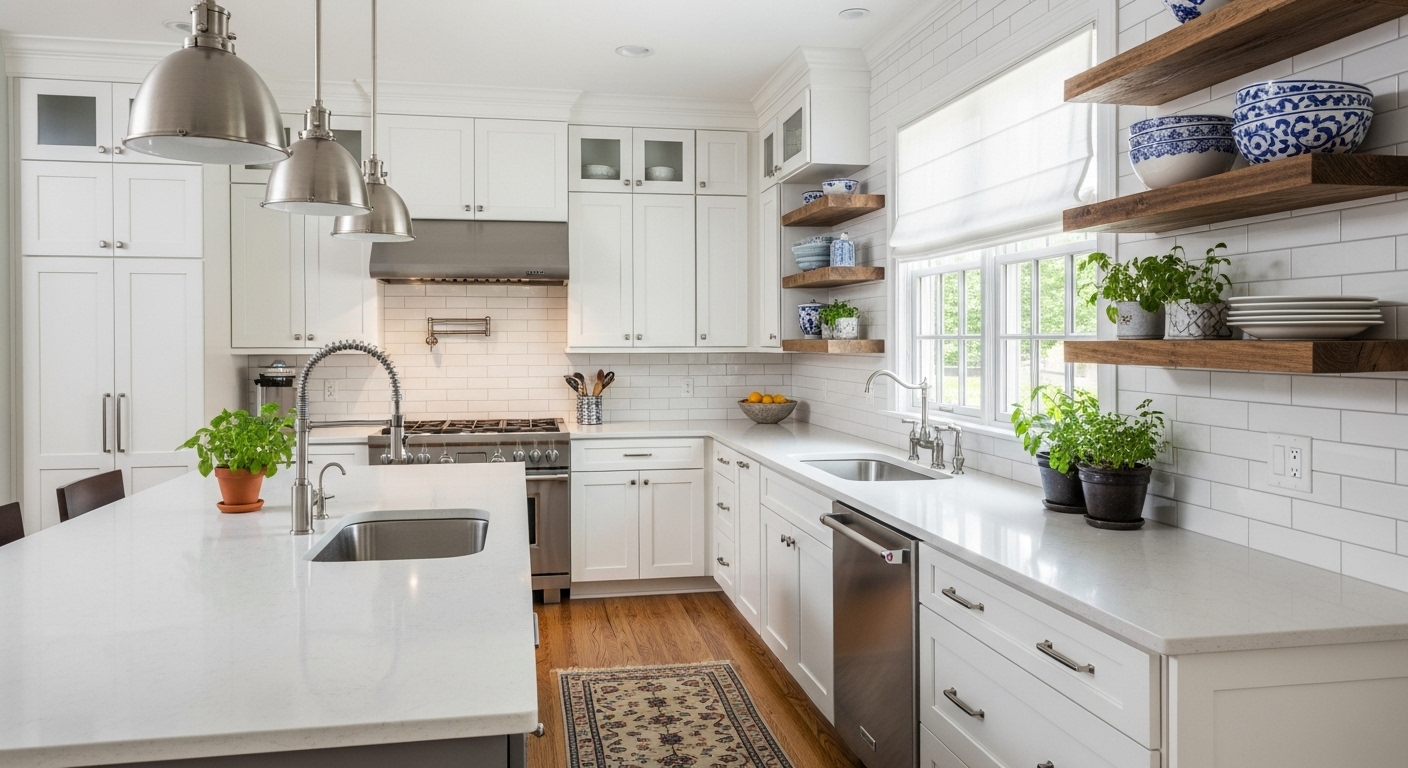
White cabinets paired with layered textures feel calmer, not cold.
Choosing Wall Colors That Do Not Fight the Cabinets
The biggest mistake with white cabinets is assuming pure white walls are the safest option. Sometimes they are, sometimes they are not. Slightly warm neutrals like soft beige, pale greige, or muted clay tones tend to work better in everyday kitchens. They soften the edges of the cabinetry and prevent the room from looking like a showroom.
Data from interior paint manufacturers shows neutral shades make up more than half of kitchen repaint projects in the last decade, with warm neutrals growing faster than cool grays. This shift is not random. Cool tones can clash with white cabinets that lean creamy, causing the whole space to feel off without an obvious reason.
Countertop Choices That Change the Entire Mood
Countertops are where white cabinets either shine or struggle. Dark countertops create contrast and grounding, while lighter surfaces keep things airy but require texture to avoid blandness.
Natural stone countertops with visible veining remain popular, especially in quartz alternatives that offer lower maintenance. Market data from the remodeling sector indicates quartz has overtaken granite in many regions due to durability and stain resistance. The subtle movement in these surfaces gives white cabinets something to play against visually.
Wood countertops also deserve more attention. Used sparingly, like on an island only, they bring warmth that white cabinets often lack on their own.
Wood surfaces add warmth without overpowering white cabinetry.
Hardware Is Not a Small Detail, Even If It Looks Like One
Cabinet hardware might seem minor, but it quietly controls the style direction. Matte black pulls lean modern and graphic. Brushed brass brings softness and age. Chrome feels cleaner but can read cold if overused.
Studies in residential design trends show homeowners increasingly choose mixed metal kitchens rather than matching everything perfectly. White cabinets make this easier because they do not visually compete. Mixing metals works best when one finish leads and the other supports, not when everything fights for attention.
Flooring That Grounds the Brightness
White cabinets naturally lift the room upward visually. Flooring brings it back down. Medium tone wood floors are common for a reason. They anchor the space without darkening it too much.
Tile flooring in kitchens with white cabinets has seen renewed interest, especially large format tiles with subtle texture. According to building material shipment data, tile remains one of the most durable kitchen flooring choices, especially in high moisture zones. Texture matters here. Smooth glossy tiles can make white kitchens feel slippery in more ways than one.
Backsplash Ideas That Add Depth Without Noise
The backsplash is where many kitchens go wrong. White cabinets do not need busy patterns screaming behind them. Instead, focus on material and finish.
Subway tile still dominates, but its role has shifted. Matte finishes, handmade edges, and vertical stacking patterns are becoming more common. These variations introduce interest without visual chaos. Glass tiles have declined in popularity due to maintenance issues and reflective glare, something homeowners increasingly complain about in long term use.
Lighting That Shapes How White Actually Looks
White cabinets change tone depending on lighting. Under cabinet lighting helps prevent shadows that make counters feel cramped. Warm LED lighting is generally preferred, as cooler light can turn white cabinets bluish or clinical.
Energy efficiency reports show LED adoption in kitchens is nearly universal in new builds now, not just for savings but for control over color temperature. This control matters more than people realize when working with white surfaces.
Open Shelving Without Turning Messy
Open shelves paired with white cabinets can work, but only with restraint. One or two sections are enough. Too many shelves and the calm disappears.
Ceramics, wood bowls, and neutral dishware complement white cabinets best. Data from lifestyle retail trends shows neutral toned kitchen accessories outsell bold colors in recent years, which explains why this look stays popular.
Textiles and Small Decor That Finish the Room
Rugs, curtains, and even countertop items matter. A washable runner with muted pattern softens the space while hiding wear. Linen or cotton textiles add texture without weight.
Plants continue to rank high in kitchen decor surveys, partly because greenery breaks the monotony of white surfaces. Even small herbs or trailing plants change how the kitchen feels, not dramatically, but enough.
White Cabinets in Small Kitchens Versus Large Ones
In small kitchens, white cabinets maximize light but require contrast somewhere else, often through hardware or flooring. In larger kitchens, white cabinets need more layering or the space can feel empty despite its size.
Housing data shows open plan kitchens tend to be larger, which explains why designers now emphasize islands, mixed materials, and varied lighting when white cabinets are involved. The cabinets stay quiet while everything else does the talking.
Long Term Practicality Matters More Than Trends
White cabinets show wear, fingerprints, and cooking residue more than darker finishes. That is not a flaw, it is a reality. Durable finishes and easy clean surfaces matter more than chasing the latest look.
Maintenance surveys from homeowners consistently rank ease of cleaning as a top kitchen satisfaction factor, often above aesthetics after the first year. White cabinets still score well here, as long as materials are chosen carefully.
Closing Thoughts
White cabinets are not a style on their own. They are a framework. The decor choices around them decide whether the kitchen feels welcoming or awkwardly blank. Thoughtful use of texture, contrast, and practical materials makes the difference, not bold statements or trendy tricks.
When done with intention, kitchens with white cabinets age better than most, not because they are perfect, but because they leave room for change later without starting over.